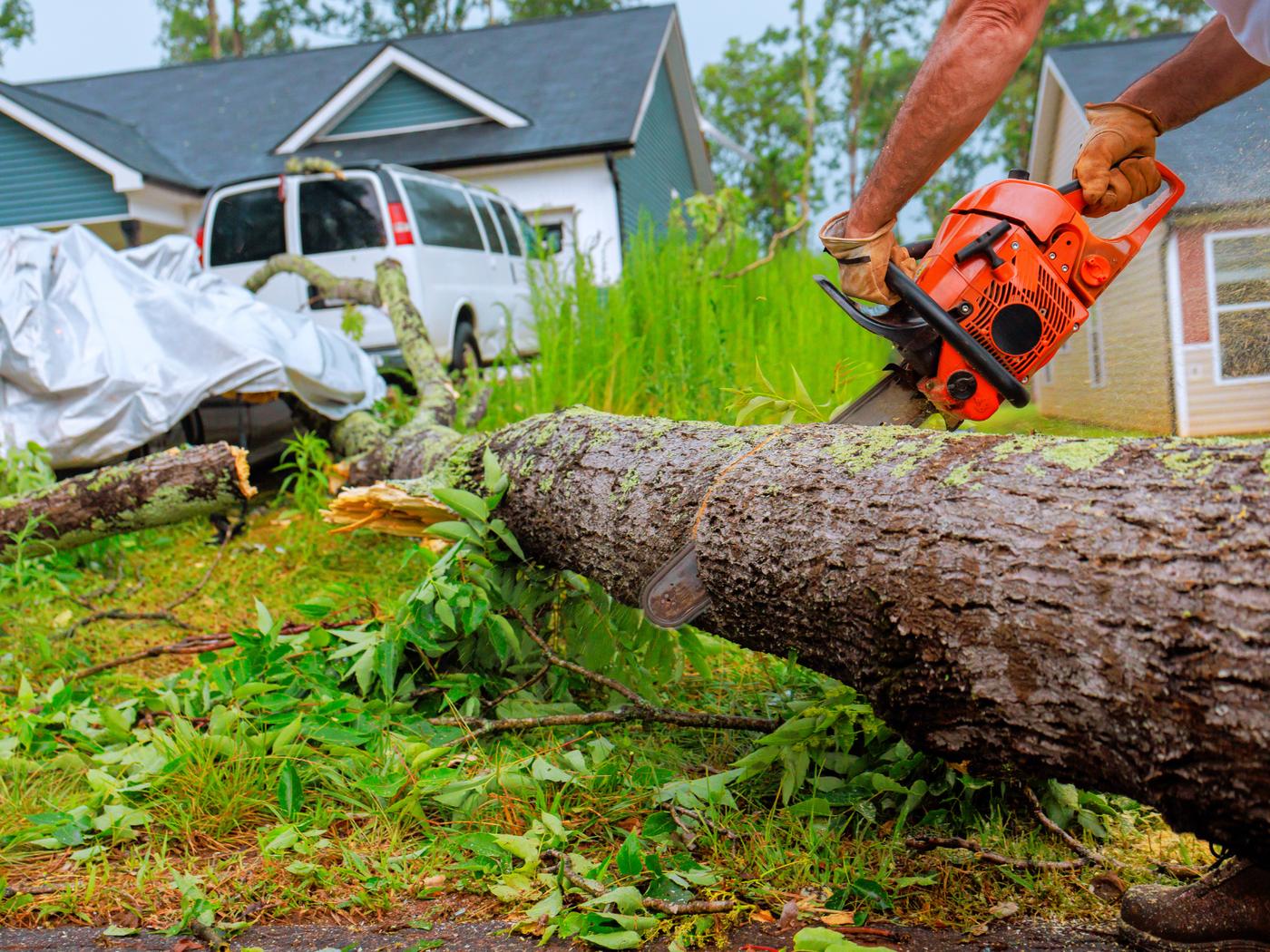
Once the weather clears, the order matters: safety and documentation first, sorting second, hauling last. This checklist is written for Gulf Coast homeowners in Escambia and Santa Rosa counties.
Before you touch anything
Stay away from downed power lines and anything touching them, and treat every line as live. Check for gas smells before entering a structure. Watch for nails, glass, and displaced wildlife in debris piles; snakes and fire ants move into brush piles fast on the Gulf Coast.
Photograph everything before cleanup starts: the roof, fences, sheds, downed trees, and the debris field. Your insurance adjuster will want the before pictures, and cleaning up first can cost you on a claim.
Sort debris into separate piles
County and FEMA-coordinated storm pickups almost always require separated piles, and mixing them can get a pile skipped. The standard categories are vegetative debris (limbs, brush, leaves), construction debris (fencing, roofing, drywall, lumber), appliances and white goods, electronics, and household hazardous waste (paint, chemicals, fuel).
Keep piles away from mailboxes, fire hydrants, storm drains, meters, and low-hanging lines so trucks can reach them.
What to do about the timeline
After a major storm, county debris collection can take weeks and sometimes runs in multiple passes. If you have a rental turning over, a sale closing, a fence that needs rebuilding, or a yard you cannot use, waiting is expensive. A junk removal service can clear vegetative and construction debris on your schedule, including fencing that county yard waste pickup will not collect.
Standing damaged trees still need a tree service. Once limbs are on the ground and cut into sections, they are ready for haul-away.
Document what you spend
Keep receipts for any cleanup and haul-away work. Depending on your policy and any federal disaster declaration, debris removal costs may be reimbursable. Ask your insurer before assuming either way.